

Merkin Prize Awarded to Merzenich: He Overturned Dogma about the Brain to Create a Miracle for Addressing Deafness and 21st Century Digital Medicine
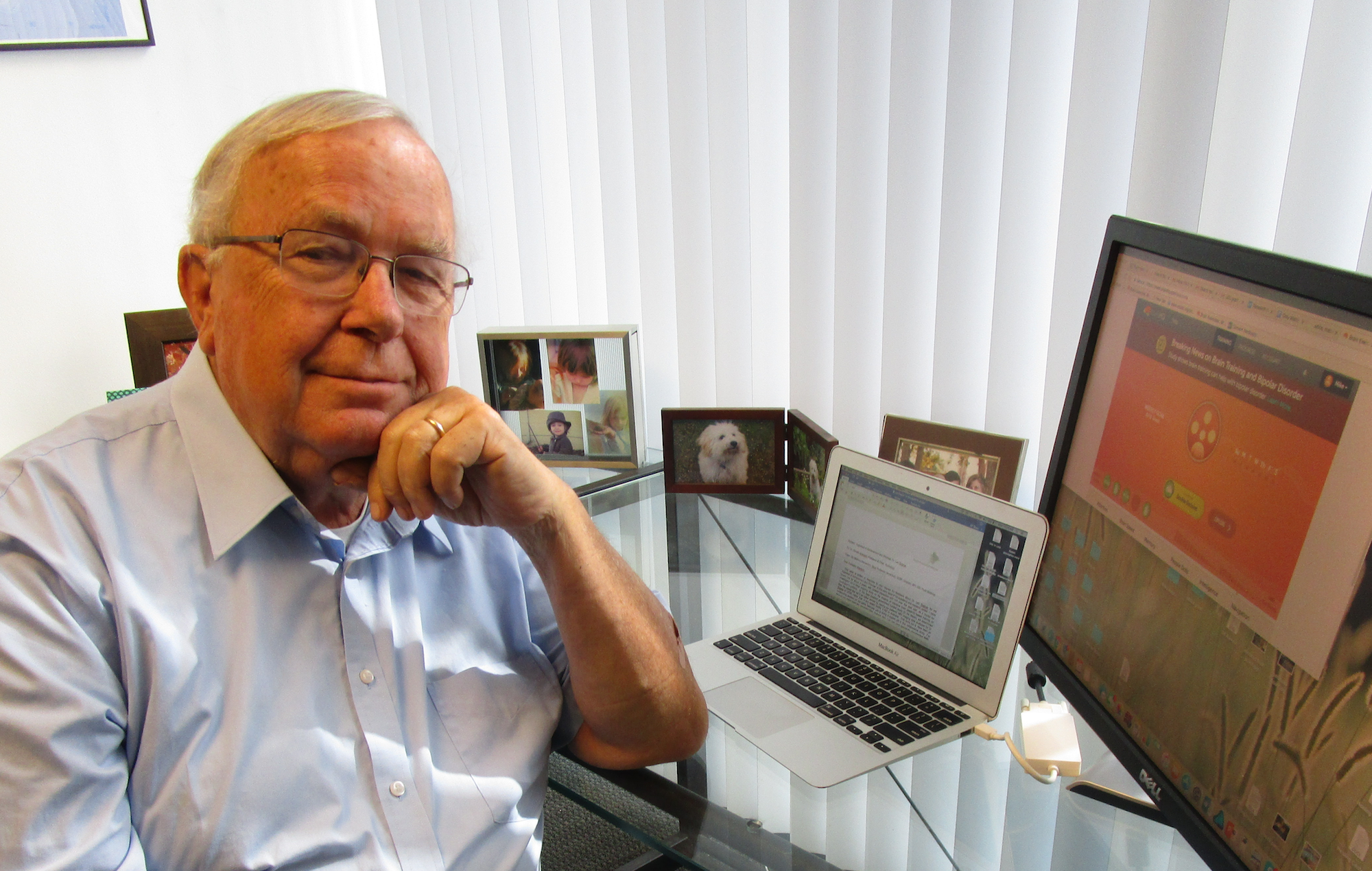
Dr. Merzenich at work
SAN FRANCISCO, June 15, 2026 (GLOBE NEWSWIRE) -- Dr. Michael Merzenich was named today as a recipient of the Richard N. Merkin Prize in Biomedical Technology, which recognizes novel technologies that have improved human health. The prize was established by the visionary health care executive for whom it is named, and is administered by the Broad Institute, one of the world’s leading biomedical research institutes. Dr. Merzenich and his fellow recipients were recognized for the invention of the cochlear implant, which has restored hearing to more than a million people with deafness. The cochlea is an inner ear organ that turns sound waves into electric pulses, which the brain interprets as sound. Dr. Merzenich is credited with solving the practical problem of how to connect a cochlear implant to the brain, given that the natural cochlea has thousands of connections. He figured out how to do it with just eight connections, by relying on his novel insight into how adult brains react to new input.
In the 1970s, Dr. Merzenich stirred a decades-long controversy in neuroscience by publishing studies showing that an adult brain is “plastic” (capable of chemical, physical, and functional change) at any age. At that time, brain scientists believed the brain was only plastic in childhood, when neural pathways were created based on childhood learning. Most believed that by early adulthood the brain was no longer capable of such physical change. While you could learn new things, the prevailing theory was that the brain’s “operating system” had become “hardwired” and was destined to wear out with advancing age (explaining cognitive aging and dementia). Dr. Merzenich argued most of that theory was wrong — that plasticity existed throughout life and that the brain was constantly changing based on life experience, in both positive and negative ways. This is now the dominant view, and the cochlear implant was both important for addressing deafness and, ultimately, for contributing an inarguable “proof point” that plasticity is lifelong and can be harnessed for human benefit.
Following this invention, Dr. Merzenich continued to lead a global effort to recognize lifelong plasticity and its potential for human benefit. In the 1990s, he made a major shift, saying that he no longer needed to drill holes in heads to harness plasticity, and preferred to “use the holes God gave us” – meaning our eyes and ears. He began developing auditory and visual brain exercises, using software designed to individualize quickly to each user, to progressively challenge brains to be faster and more accurate, and to engage plasticity to lay new neural pathways to improve cognitive function. He directed his team to build the exercises to stimulate and revitalize the brain’s neurochemical systems, by making them attentionally demanding (to pump acetylcholine), filled with novelty (to pump noradrenaline) and laden with rewards (to pump dopamine).
By continuously pushing the brain to reach beyond its grasp, and by upregulating brain chemical production, Dr. Merzenich harnessed plasticity to improve cognitive performance and address a host of human ailments, including cognitive aging, brain injuries (TBIs, stroke, chemobrain, HIV/HAND), neurodegenerative diseases (pre-dementia, Alzheimer’s, Parkinson’s, multiple sclerosis) and mental health challenges (depression, anxiety/stress/fatigue, schizophrenia, bi-polar).
Dr. Merzenich was a research scientist and professor at University of California San Francisco across five decades. He taught thousands of neuroscientists and medical students. In 2012, hundreds of his past students honored him at his UCSF retirement dinner with two words: “More. Faster.” Those words were his mantra throughout his research and teaching career. They also led to two sabbaticals, in which he set up corporations, believing they could advance the science faster than in an academic setting. In 1996, he co-founded Scientific Learning Corporation, which developed Fast ForWord, an auditory training program to help with language learning impairments and with general reading. In 2003, he co-founded Posit Science Corporation, where he still leads the science team in expanding into other applications for human benefit. Posit Science’s initial focus was on cognitive aging, and it developed the BrainHQ app of brain exercises and assessments.
As BrainHQ’s research and development progressed, it expanded into addressing brain injuries, mental health, and neurodegenerative diseases. Dr. Merzenich credits football legend Tom Brady with teaching him that the same exercises designed to be “digital medicine” for those with cognitive challenges, could also help someone with a great brain perform even better. What began as secret work to help Brady win his final four Super Bowl rings has expanded to training for elite athletes, the military, special forces, SWAT teams, NASA, and others focused on peak brain performance.
BrainHQ has shown benefits in more than 300 studies. Such benefits include gains in cognition (attention, speed, memory, decision-making), in quality of life (depressive symptoms, confidence and control, health-related quality of life) and in real-world activities (health outcomes, balance, driving, workplace activities). BrainHQ is used by leading health plans, medical centers, clinics, and communities, and by elite athletes, the military, and other organizations focused on peak performance. Consumers can try a BrainHQ exercise for free daily at https://www.brainhq.com.
A photo accompanying this announcement is available at https://www.globenewswire.com/NewsRoom/AttachmentNg/dc7af469-e192-40b1-8382-77a909afb717

Contact: media@brainhq.com

Dr. Michael Merzenich
Dr. Merzenich at work
Legal Disclaimer:
EIN Presswire provides this news content "as is" without warranty of any kind. We do not accept any responsibility or liability for the accuracy, content, images, videos, licenses, completeness, legality, or reliability of the information contained in this article. If you have any complaints or copyright issues related to this article, kindly contact the author above.
